Where to Find Us
On Murumburr Country in the heart of Kakadu National Park — just a three-hour drive south-east of Darwin and only 1 km from Cooinda Lodge Kakadu.
With dining at Cooinda and the world-famous Yellow Water Billabong Cruise close by, it’s the perfect day trip from Darwin — or stay a little longer and truly immerse yourself in this sacred place. Choose from Cooinda’s range of accommodation options, including camping, glamping, family-friendly lodge rooms, and luxury safari villas.
Warradjan Opening Hours:
Dry season (Apr–Sep): 9–5pm daily
Wet season (Oct–Mar): 10–4pm daily
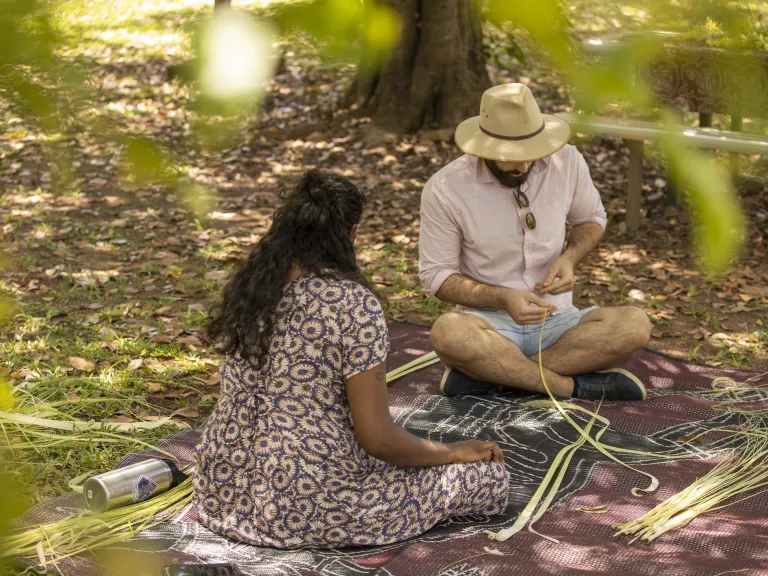
Weaving on Country Experience at Warradjan
Available Thursdays to Sundays, from June to September!
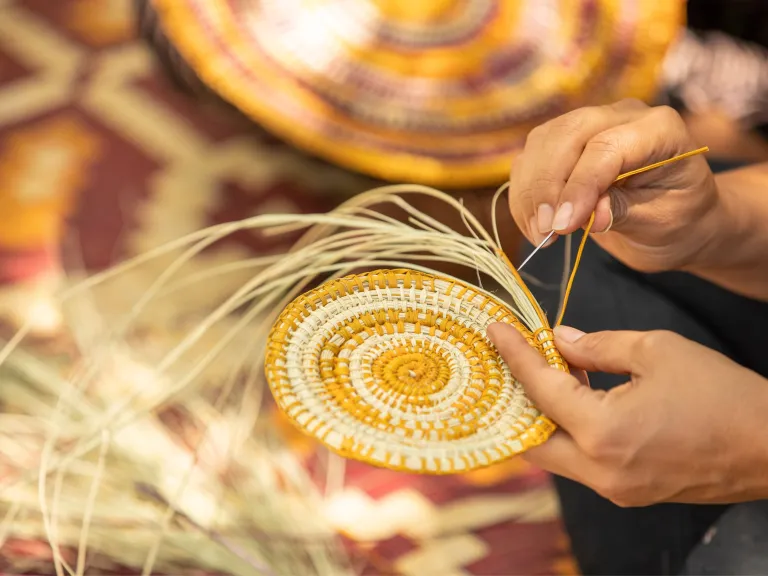
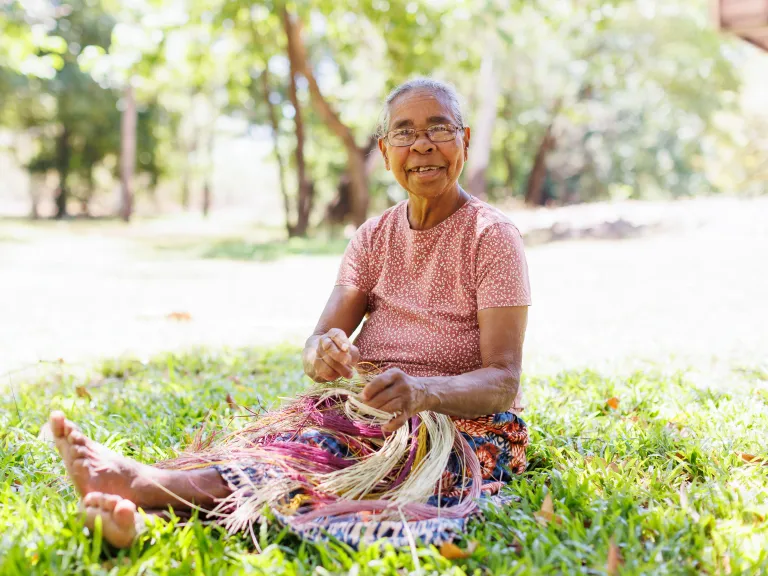
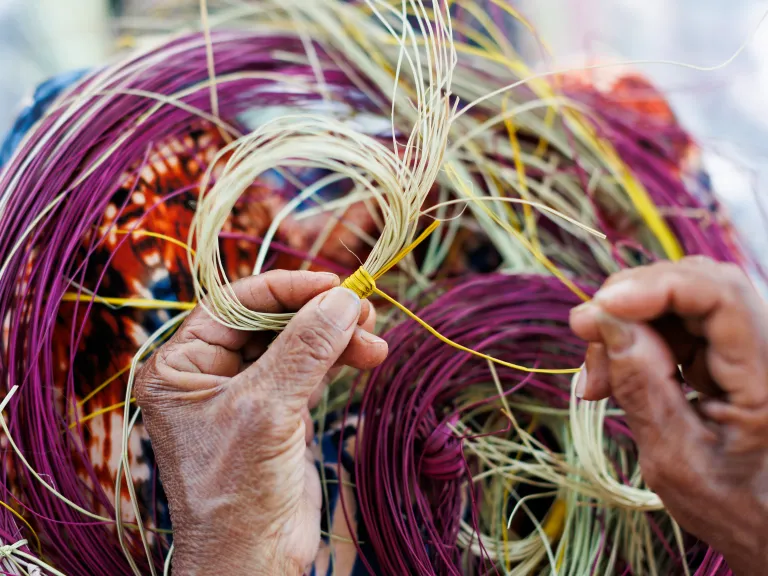
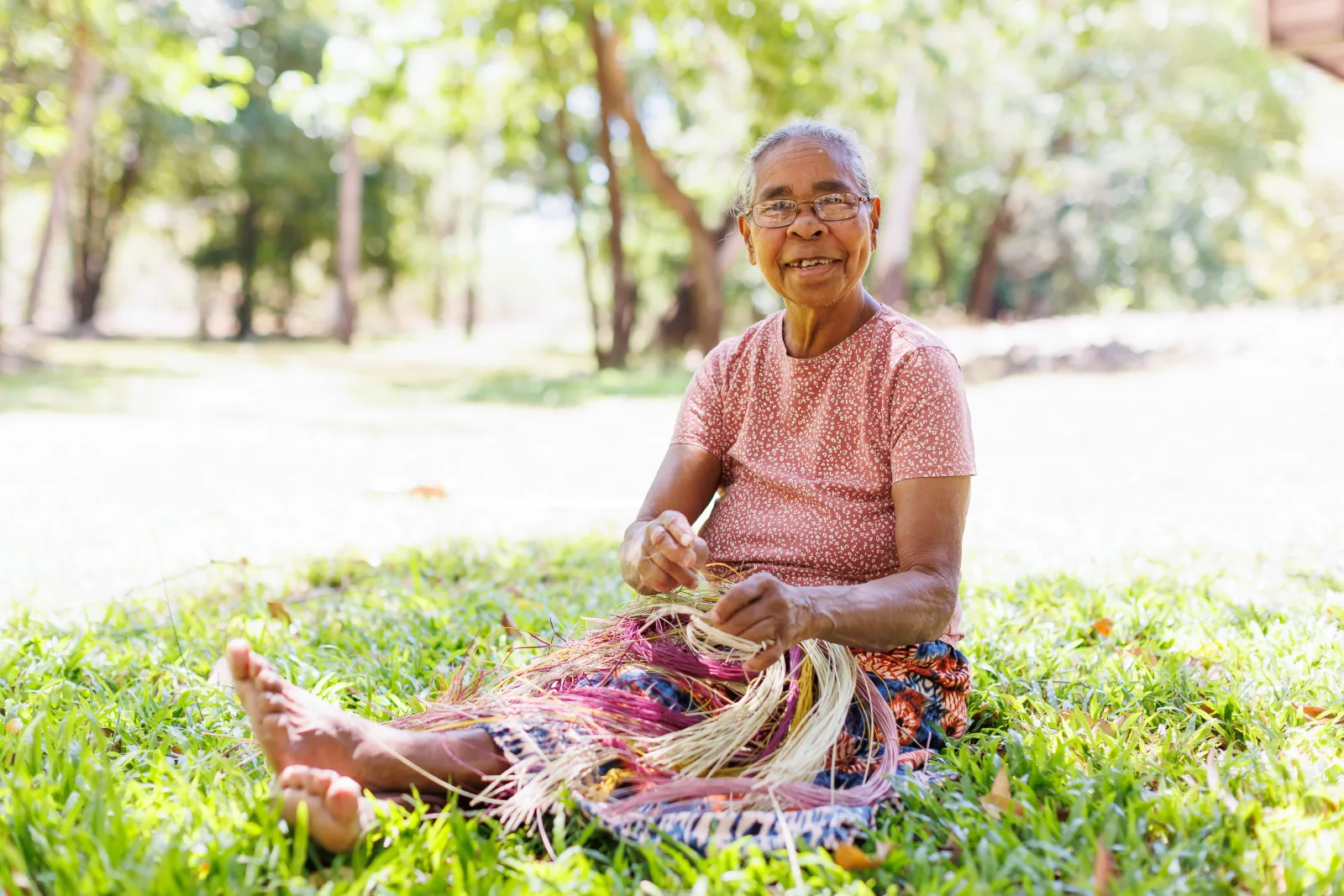
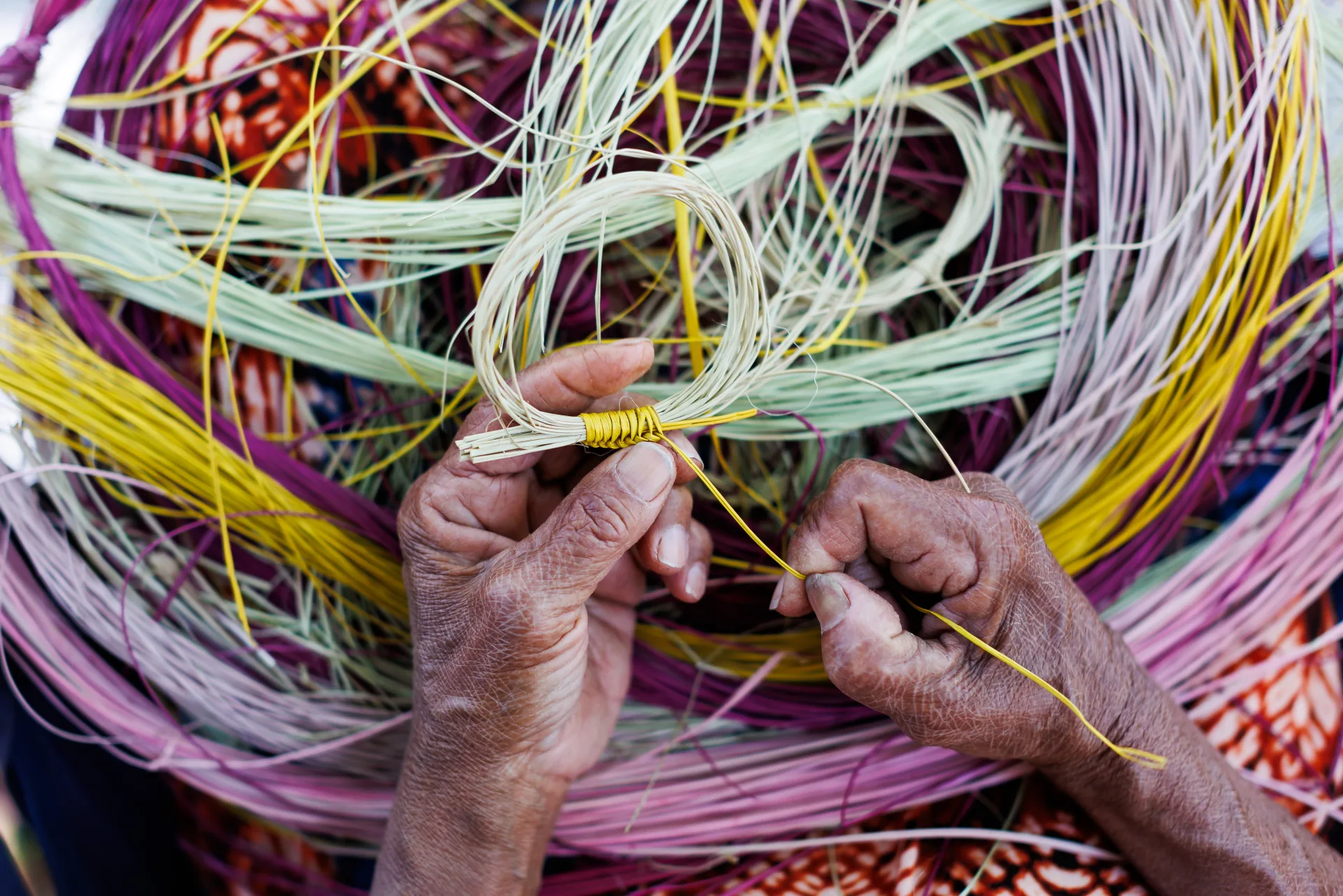
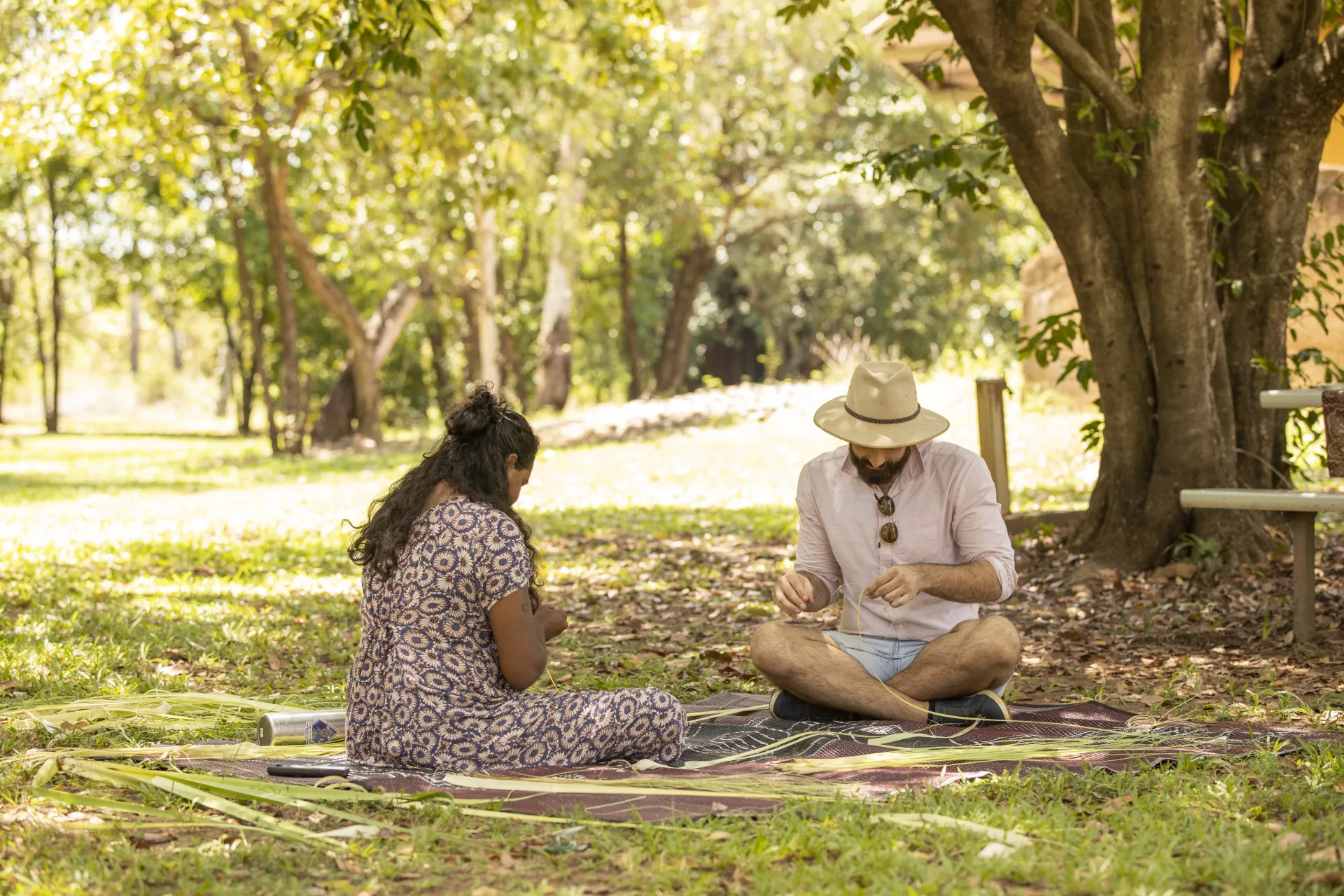
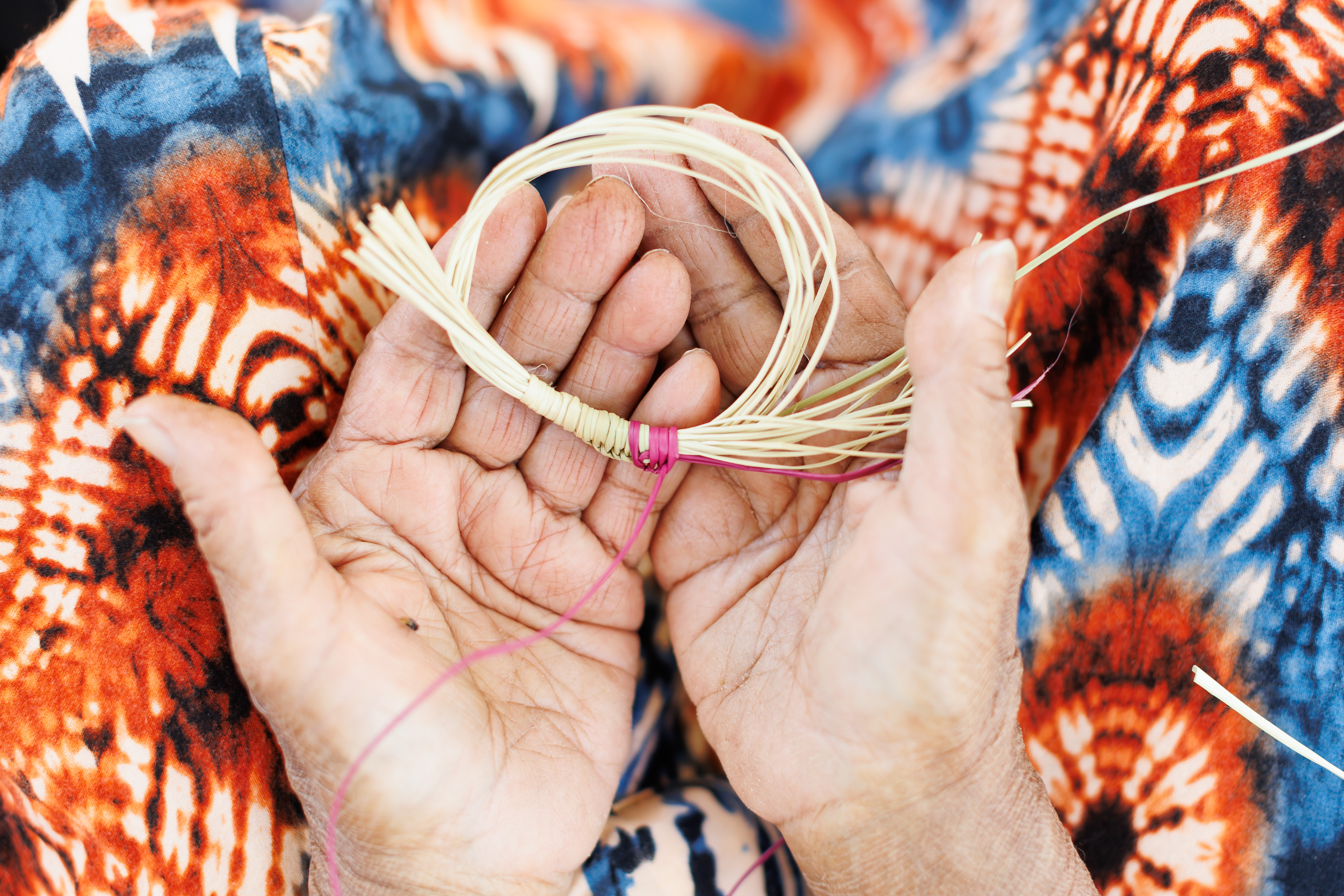
At Warradjan Cultural Centre, culture is not only displayed, it is lived. Traditional Owners and family members of the Murumburr Clan regularly visit the Centre to share knowledge directly with visitors. Throughout the year, they offer weaving workshops, generously passing on skills and stories connected to Country.
Cultural Museum Exhibit
Bininj/Mungguy, park staff and the designers, worked closely together to determine exactly what Bininj/ Mungguy wanted to say and how they wanted to display their story. During the process Mandy Muir made a key statement “Our land is our life”. This became the theme of the display.
It all began to take shape after many drawings, plans, models and drafts of the text were considered. In the Warradjan Aboriginal Cultural Centre Bininj/ Mungguy have displayed many of their important stories, especially those from the creation era when the Nayuhyunggi (first people) created the land, plants and animals and gave people laws to live by.
Visitors are invited to move through the display as a rainbow serpent creation ancestor moves through the country travelling first through the lowlands during the dry season, then into the stone country during the wet.
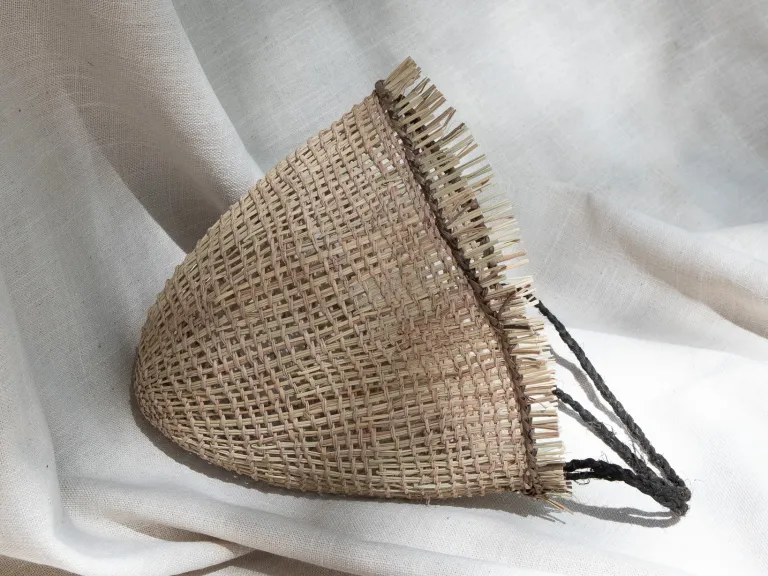
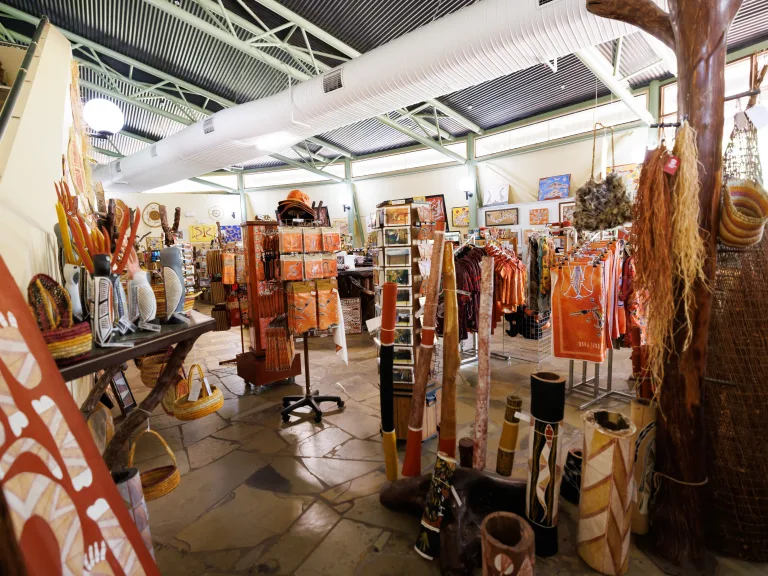
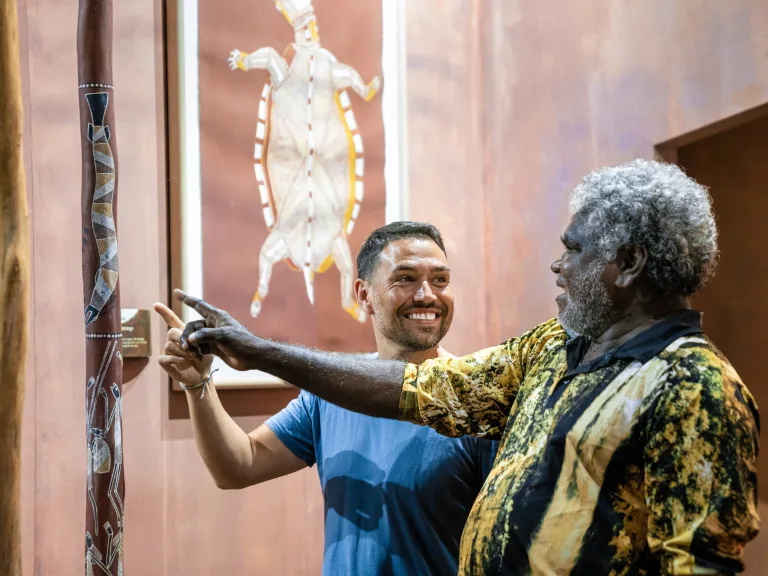
All the artefacts that you see were made by Bininj/ Mungguy. Great care has been taken collecting and constructing display features such as the goose hunting platform, dilly bags, pandanus baskets and paintings.
Please note: photography is not permitted inside the museum for cultural reasons.
Bininj and Mungguy People
Bininj/Mungguy people — the Traditional Custodians of Kakadu National Park — have cared for these lands for over 65,000 years minimum. In the north they are known as Bininj, and in the south as Mungguy. Across Kakadu, families maintain a deep spiritual connection to Country, guided by ancestral law, seasonal knowledge and living cultural practice.
Actively spoken languages in Kakadu include Kundjeihmi (also known as Mayali), Kunwinjku, and Jawoyn.
Unique Building Design: Warradjan (Pig-Nosed Turtle)
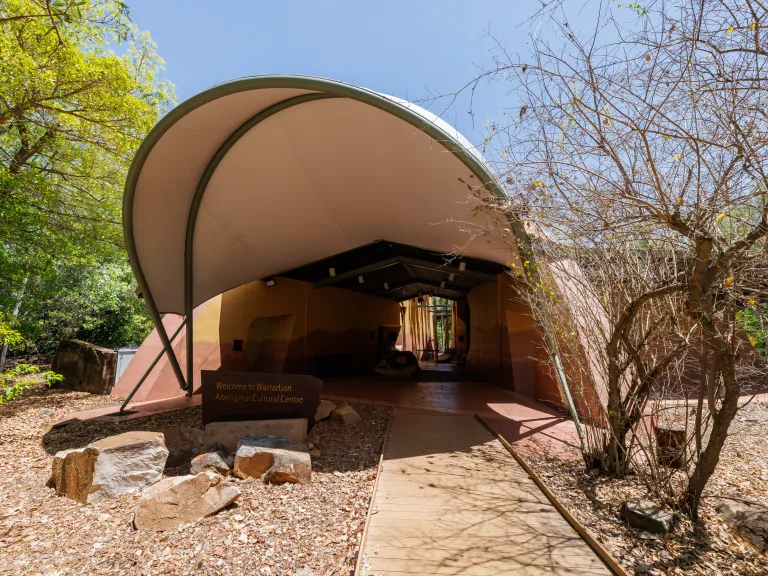
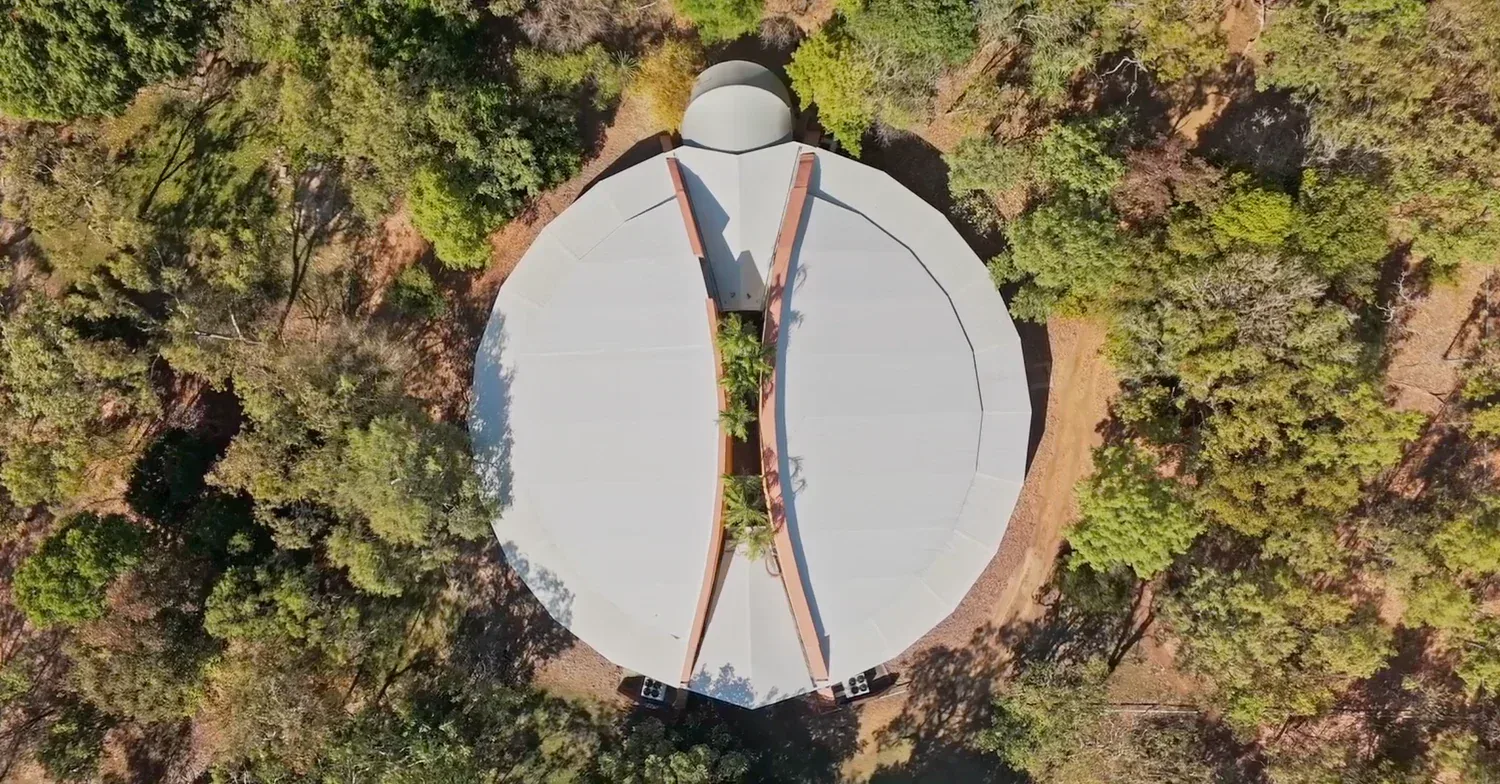
In the early stages of the cultural centre project, Bininj/Mungguy came together to discuss the building design, its role and its facilities. At most Bininj/Mungguy gatherings, people sit in circles. During an early meeting Bininj/Mungguy decided that a circular building would reflect this way of communication. It was decided that the cultural centre needed to be round like people sitting together.
At later meetings Bininj/Mungguy saw the round shape as being like a warradjan (pig-nosed turtle). So the building design developed into the Warradjan Aboriginal Cultural Centre.
Discussions about the design started in 1989, with specific planning beginning in 1992. The architects were Australian Constructions Services of Darwin, with display and gallery designed by David Lancashire Design. After comprehensive consultation and research involving Traditional Owners, Parks Australia staff and authorities such as George Chaloupka, the display was completed in 1995.
Origin of the Name 'Warradjan'
Warradjan is the Kundjeyhmi word for Pig-Nosed Turtle, an inhabitant of the nearby Ngurrungurrudjba (Yellow Water Billabong) and native species found within Kakadu National Park. This is significant not only for its name, but also for the salient shape of the building, which reflects circular gatherings and way of communication of Bininj/Mungguy people.