‘Crocodile Dundee’ Brought Me to Northern Australia. Aboriginal Guides Helped Me Understand It.
Crocodile Dundee’s connection to Kakadu
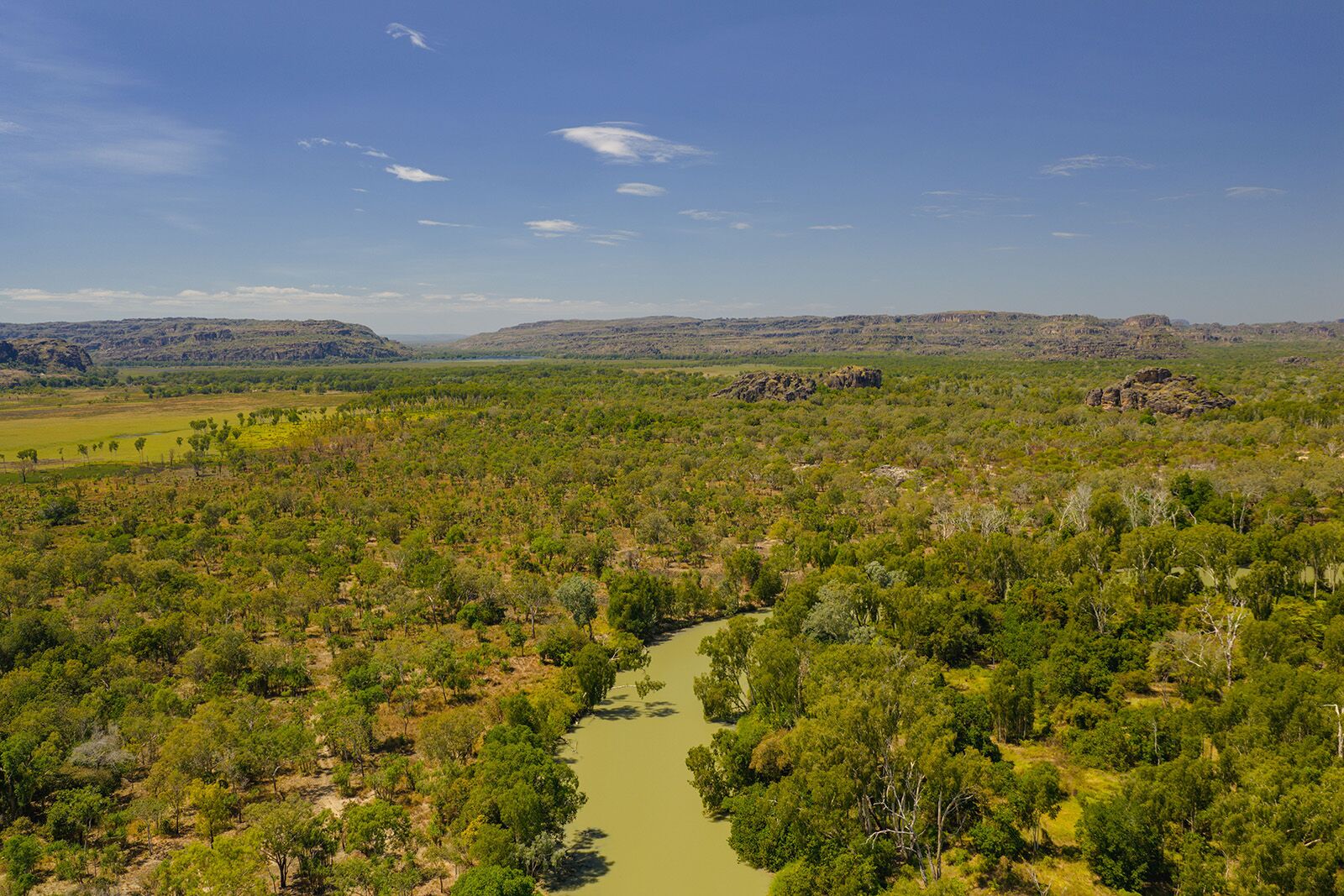
Photo: Tourism & Events NT/ Safari Global/ Guluyambi Cultural Cruise
Released in 1986, Crocodile Dundee became a global box-office hit and is still the highest-grossing Australian film of all time. Some of its most memorable scenes introduced international audiences to Kakadu, including those filmed at Ubirr (a rock art site), Burrungkuy (a sandstone outcrop), and Gunlom (a waterfall and plunge pool). The 1988 sequel returned to the region, filming around the sandstone formations along the Bardedjilidji walk.
Our guides made it clear how many of these filming locations were connected to their own families. Natasha Nadji, a Traditional Owner who grew up in Jabiru and Cannon Hill Outstation, told us her grandfather, Bill Neidjie, helped scout locations and acted as a go-between for the filmmakers and local Aboriginal families, helping explain the production and advocating for their involvement.
The film’s portrayal of Aboriginal people has drawn criticism over the years, but for Nadji’s family, watching it means seeing familiar people and places onscreen, and they’re happy whenever it comes on television. She describes it as “a love story for Country, and a love story for a woman.”
I also spoke with Delvene Delaney, whose late husband John Cornell co-created and produced Crocodile Dundee. Delaney accompanied him during the first film’s production and worked on the sequel. She remembered filming in places so remote that the crew had to build roads to reach them. The production wanted audiences to see a part of Australia they knew little about.
When I asked what she learned from the Aboriginal people she met during filming, Delaney recalled her young daughter spending time with actor Ernie Dingo during the production of the sequel. Between filming, he would carry her on his shoulders through the bush, showing her where the crocodiles slept and where to look for snakes.
“It really opened us up to being a part of Australia. Like, don’t be afraid to go into the bush, because we’re all its inhabitants,” she said.
Exploring Ubirr’s rock art with an Aboriginal guide
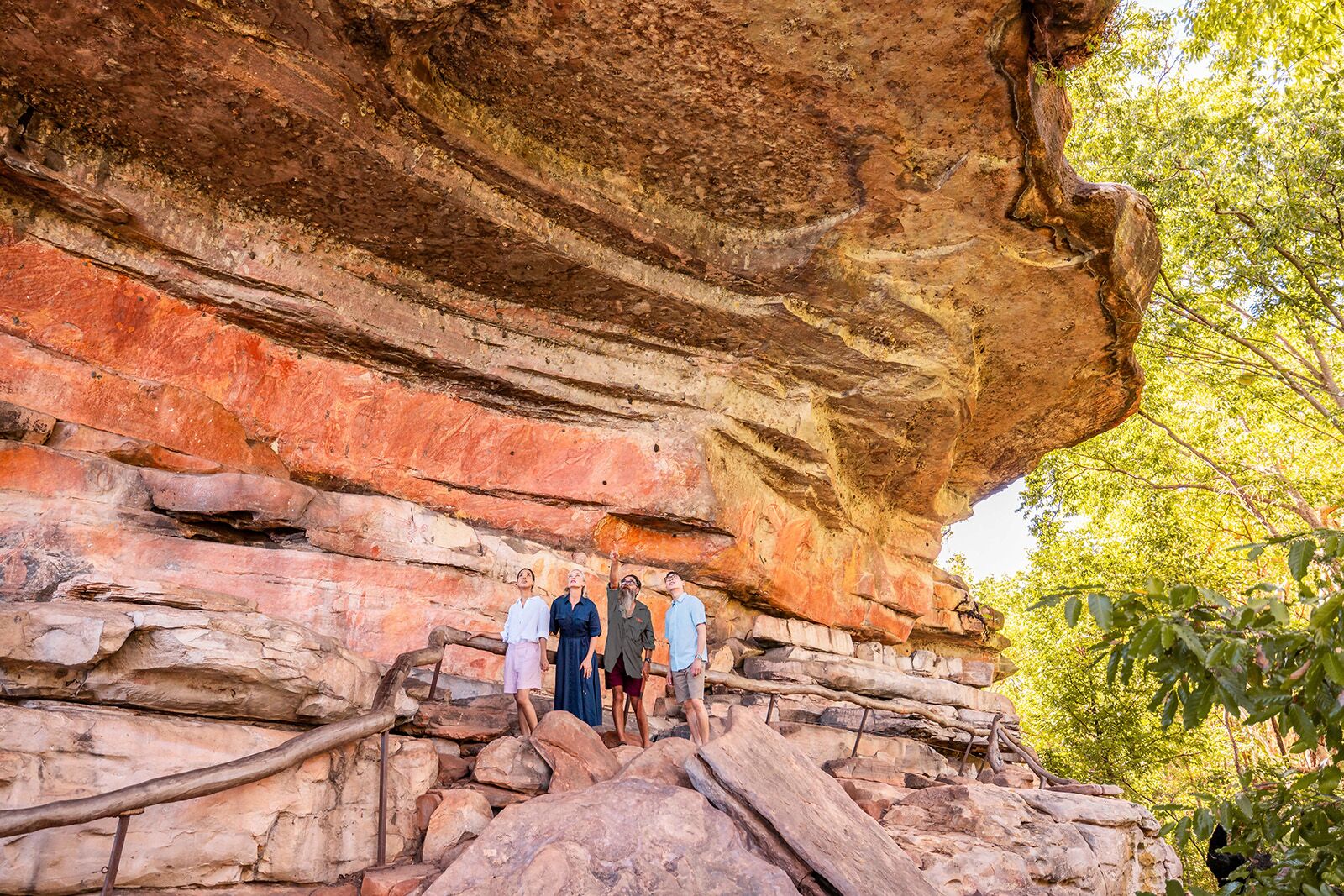
Photo: Tourism & Events NT/Tourism Australia
Nadji led us through Ubirr’s rock art galleries, where the paintings depict fish, turtles, kangaroos, and ancestral beings. She explained the stories she’d learned from her family, including one story involving Mimih spirits, which Nadji described as slender beings who live in cracks in the rocks. They’re so thin, she explained, that they avoid coming out on windy days for fear of breaking in half. In the story she shared, a Mimih spirit brought down a rock and painted a kangaroo, which introduced the clans to the crosshatching painting technique.
At the Rainbow Serpent site, Nadji explained a more personal connection. In the story she shared, the serpent swallowed a clan after being disturbed by a crying child. Nadji identifies herself as a descendant of the clan in the story, and she grew up learning to respect the serpent’s presence on Country.
That teaching came up even when she went hunting with her father. Nadji remembered being an extremely talkative child, much to his frustration, and he was always telling her to “be quiet; how are we gonna catch anything?”
“He wasn’t just worried about scaring the animals away,” she told us. He was also reminding her to respect the Rainbow Serpent and avoid causing trouble in places where the spirit might be present.
Kakadu has been home to Aboriginal people for more than 65,000 years. Bininj is the term used for Aboriginal people in the park’s north, Mungguy in its south. Country includes land, water, animals, cultural knowledge, and the relationships and responsibilities connecting people to them.
“You can appreciate the way the Eiffel Tower was built. But it’s not as old as this art,” Nadji said, which had our group thinking about how much attention we give famous landmarks elsewhere.
After visiting the galleries, we climbed to Ubirr’s lookout over the Nadab floodplain. This is where Mick Dundee stands with Sue and gestures across the country he calls his backyard. We then continued to Bardedjilidji, where a walking trail passes sandstone pillars, small caves, and a natural tunnel. It was one of my favorite walks of the trip and looked almost otherworldly.
Allow time for both the paintings and the lookout at Ubirr. The lookout is an obvious draw, but give the galleries time, too. Walking with an Aboriginal guide helped me understand far more than I would have on my own, so check available cultural tours and the park’s current guided-activity program before visiting.
Learning about caring for Country at Burrungkuy
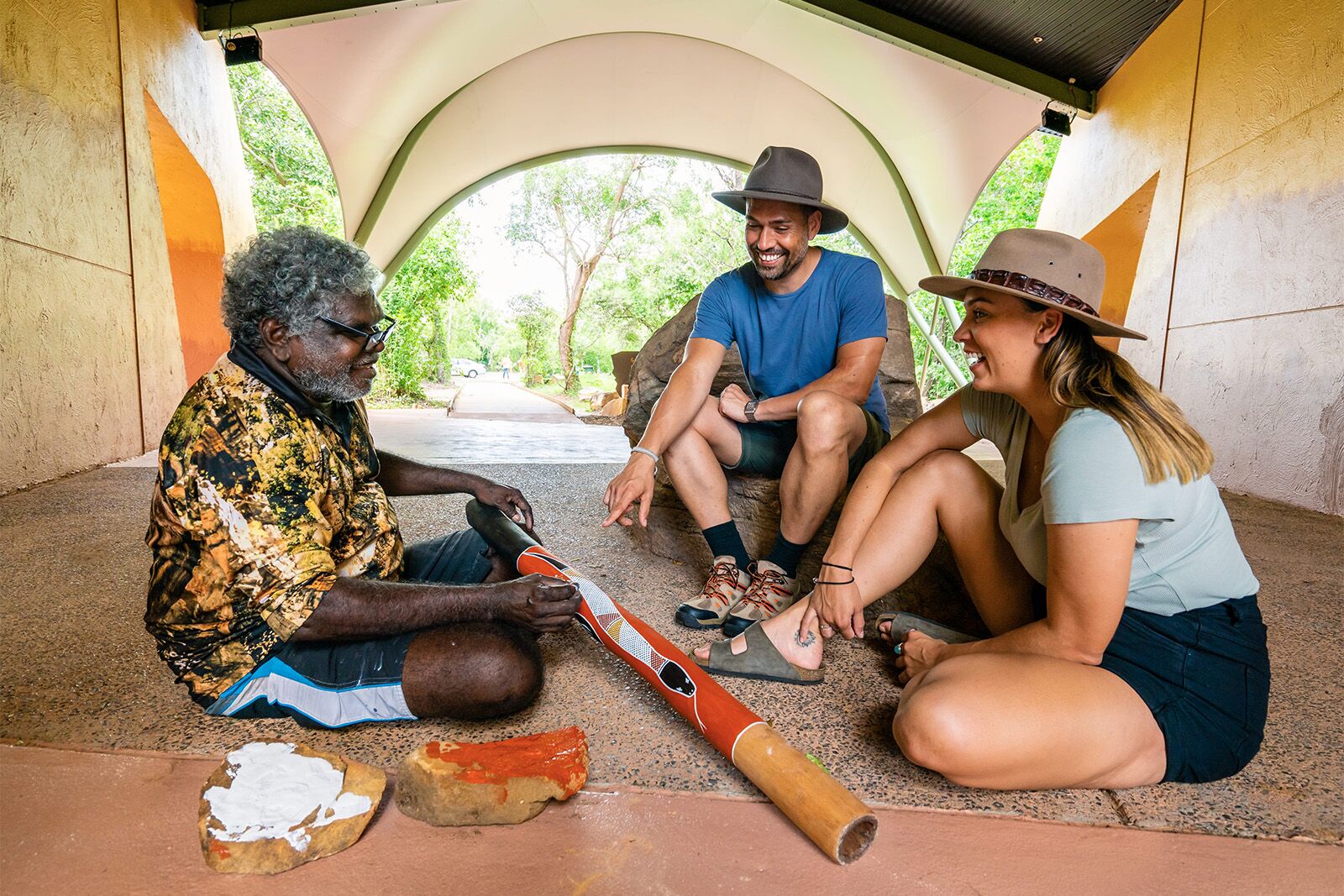
Photo: Tourism & Events NT
At Burrungkuy, also known as Nourlangie, Mandy Muir guided us through rock shelters and the Anbangbang gallery. She explained paintings of Namarrkon, the Lightning Man, and stories connected to kinship and family relationships.
She also described the practical work of conserving the art. One of her early park jobs involved protecting paintings, including using silicone drip lines to divert heavy rainwater away from rock faces during monsoon season. She spoke about hotter weather and its effects on the rock. I’d spent the morning admiring the paintings, and now I was learning how much work goes into protecting them.
Muir has connections to the Murumburr people of Kakadu and the Wardaman people of the Katherine region. She and her mother, Jessie Alderson, established Kakadu Billabong Safari Camp, creating another way to share their knowledge with visitors.
Later, at Warradjan Aboriginal Cultural Centre, I read a quotation attributed to Muir: “The most important thing in the Aboriginal way of life is culture. When I look at a lot of other Aboriginal people who don’t have culture, I feel sad for them because without culture, you don’t really feel that you have a place of belonging. We have our culture. Our land is our life.”
The center is about three-quarters of a mile from Cooinda Lodge, one of the places I stayed. Its exhibits cover kinship, food, personal histories, and life in Kakadu. Allow about an hour to walk through, check for activities like weaving and painting clapping sticks during your stay, and follow the strict photography restrictions inside.
For another view of this part of the park, visit nearby Nawurlandja lookout. The short, steep climb overlooks Anbangbang Billabong, Burrungkuy, and the Arnhem Land escarpment. Save the climb for a cooler part of the day, and bring water and sun protection. Short walks still feel like a workout in Kakadu’s heat.
Taking a sunset cruise on Yellow Water
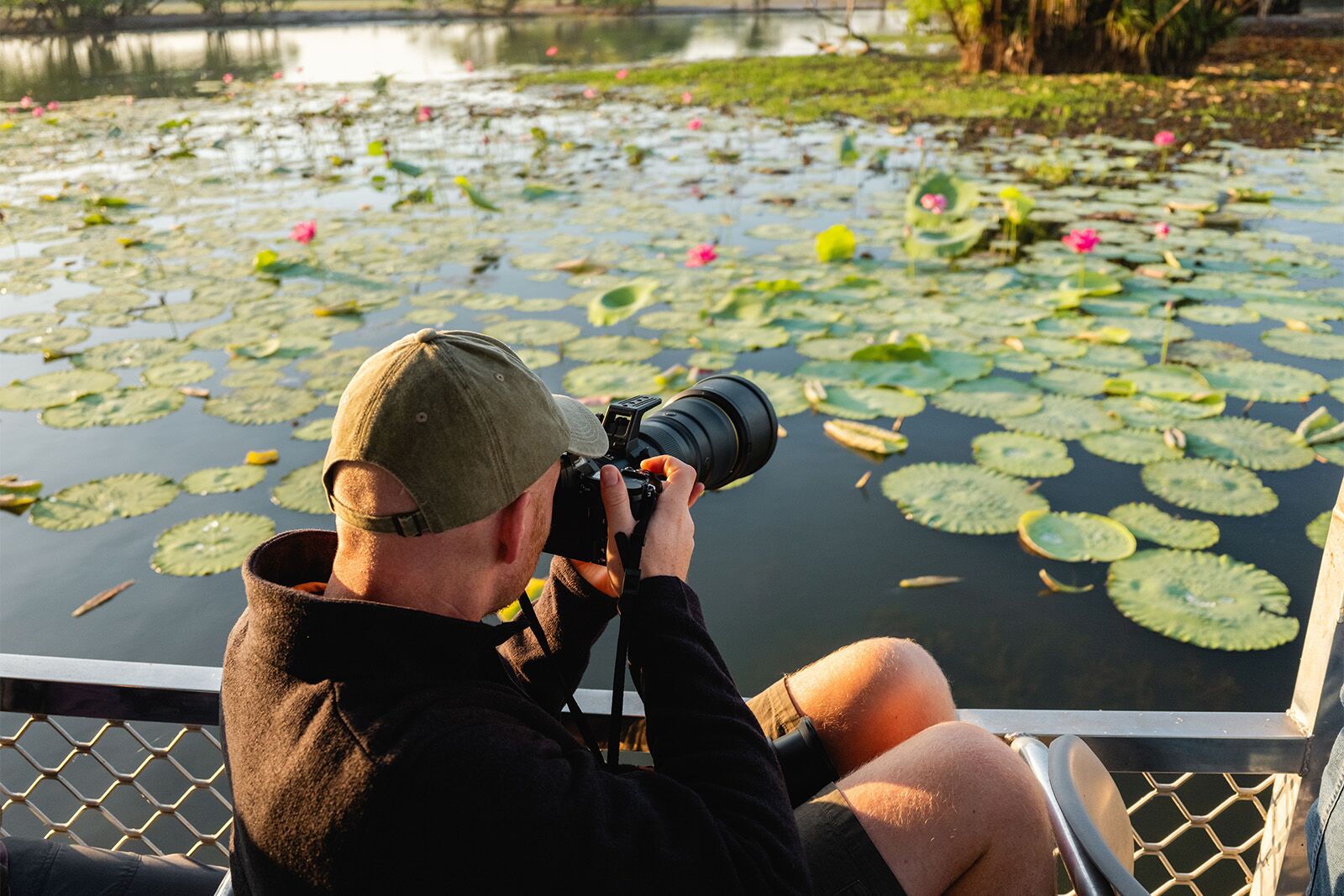
Photo: Tourism & Events NT/@Ben.Savage
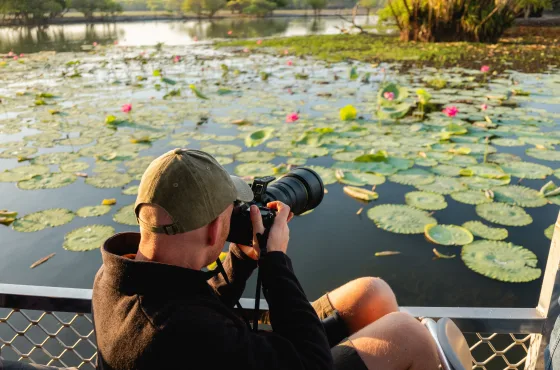
The Yellow Water cruise was one of my favorite activities in Kakadu. From our covered sightseeing boat, we saw plumed whistling-ducks and black-necked storks, saltwater crocodiles, and roaming buffalo. The buffalo aren’t native to Australia and were introduced to the Northern Territory in the 19th century to supply remote settlements with meat. Today, they’re a feral species the park manages, but seeing them roam the wetlands alongside the birds and crocodiles made the cruise feel like a wildlife safari.
Our guide, Dennis Miller, has nearly 30 years of tourism experience and lives on an outstation near the Jim Jim Creek system. His father is from New Zealand, and his mother is Aboriginal Australian. As we traveled through the billabong, also known as Ngurrungurrudjba, he shared stories about learning from his family and the animals they were allowed to hunt.
A few of those stories had the whole boat laughing. Pointing out trees he called itching trees, Miller explained one way adults dealt with children who were misbehaving.
“Sometimes us kids would be naughty, and when they would try to teach us a lesson, they would tell us to go play in the trees over there… the next day we would be itching everywhere.”
Our boat was busy during our September visit, so it’s a good idea to book ahead, especially for a sunset departure. Transfers run from Cooinda Lodge to the nearby dock, so the cruise is easy to include if you stay there.


